
The Great Ruaha River and why it matters
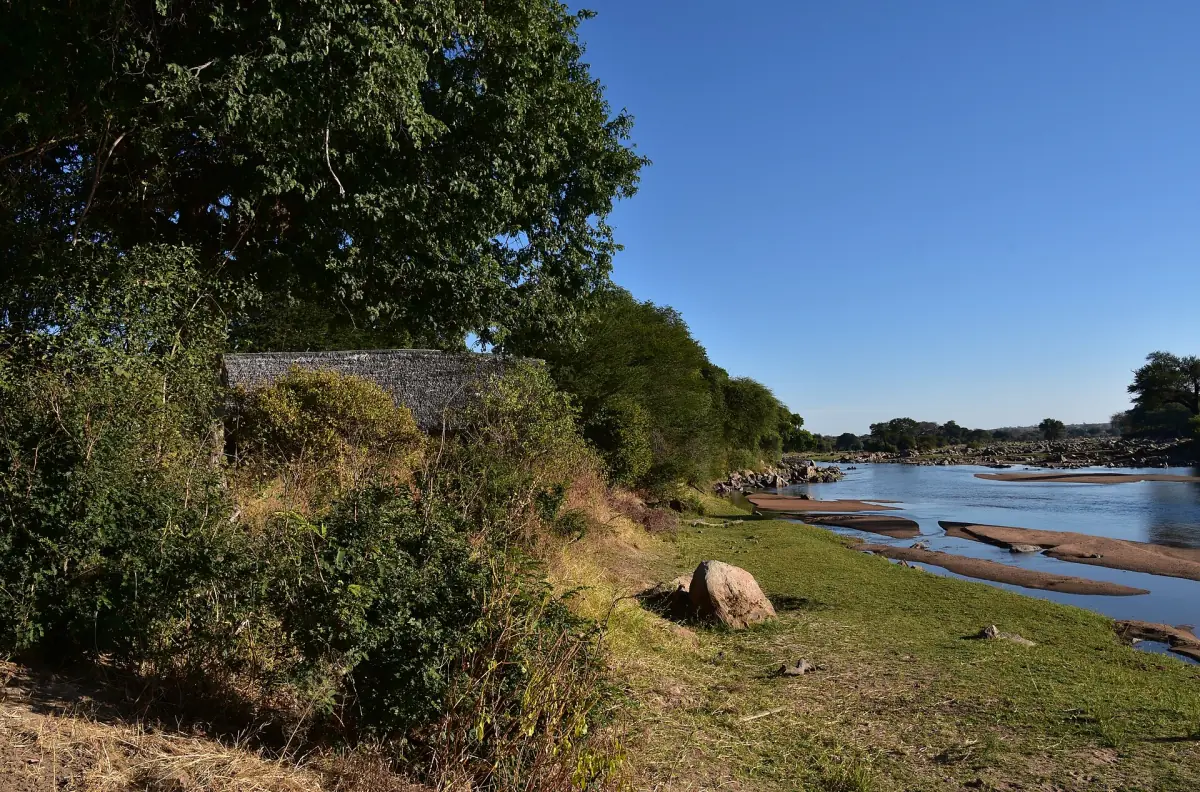
The Great Ruaha River is the lifeline of the park. Water decides where animals feed, drink and rest, so most good game drives follow the river and its dry side channels. Lions, elephants, giraffes and kudu all come back to it, and in the dry months the animals have fewer places to choose from.
The river is also a good reason to book a proper game drive rather than a short stop. Predators are watched near watercourses in the early morning and evening, and the light on the sand banks is soft then. If you are still choosing a trip, start with our Ruaha safari guide.
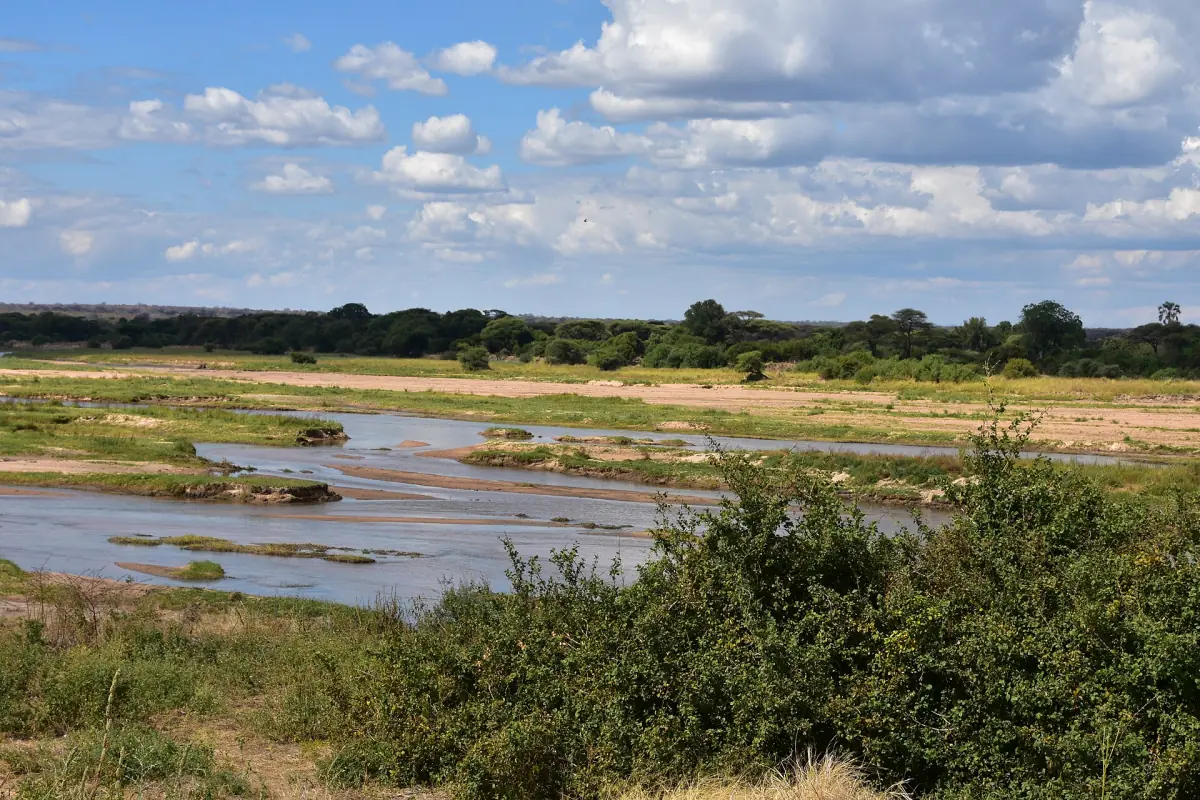
How the Great Ruaha River changes through the year
A sand river in the dry season, a fast brown river in the rains.
The wet months
Rain falls from late November into May. Rivers rise, tracks can turn to mud and some crossings become difficult. The river looks full, and animals spread out because water is easy to find.
The dry months
From about June the flow shrinks. Sand banks widen and the river breaks into pools and braided channels. Seepage points in the sand and the pools that remain become important drinking places, so animals concentrate along the river.
Late dry season
Before the rains return, the heat builds and the river is at its lowest. This is a time when the water pattern matters most for finding animals, but it also depends on the year. Ask your host how much water is in the river before you set your plans.
Our pick: a night inside the park
A night in the park bandas puts you in Ruaha for the early and late drives, when predators are watched along the watercourses.
Hand-picked tours, booked through GetYourGuide. Prices are indicative starting prices in US dollars (as of October 2026). Tap a tour for live availability and the current price in your currency.
Ruaha safaris and river game drives
Game drives in Ruaha National Park and trips from nearby towns, with live prices and availability. Check what each offer includes, such as park fees, transfers and meals.
Wildlife along the Great Ruaha River
Great and Lesser Kudu, lions, elephants, leopards, buffalo, hippos and crocodiles live in the park. A good chance of seeing something is what the river gives you, not a guarantee.
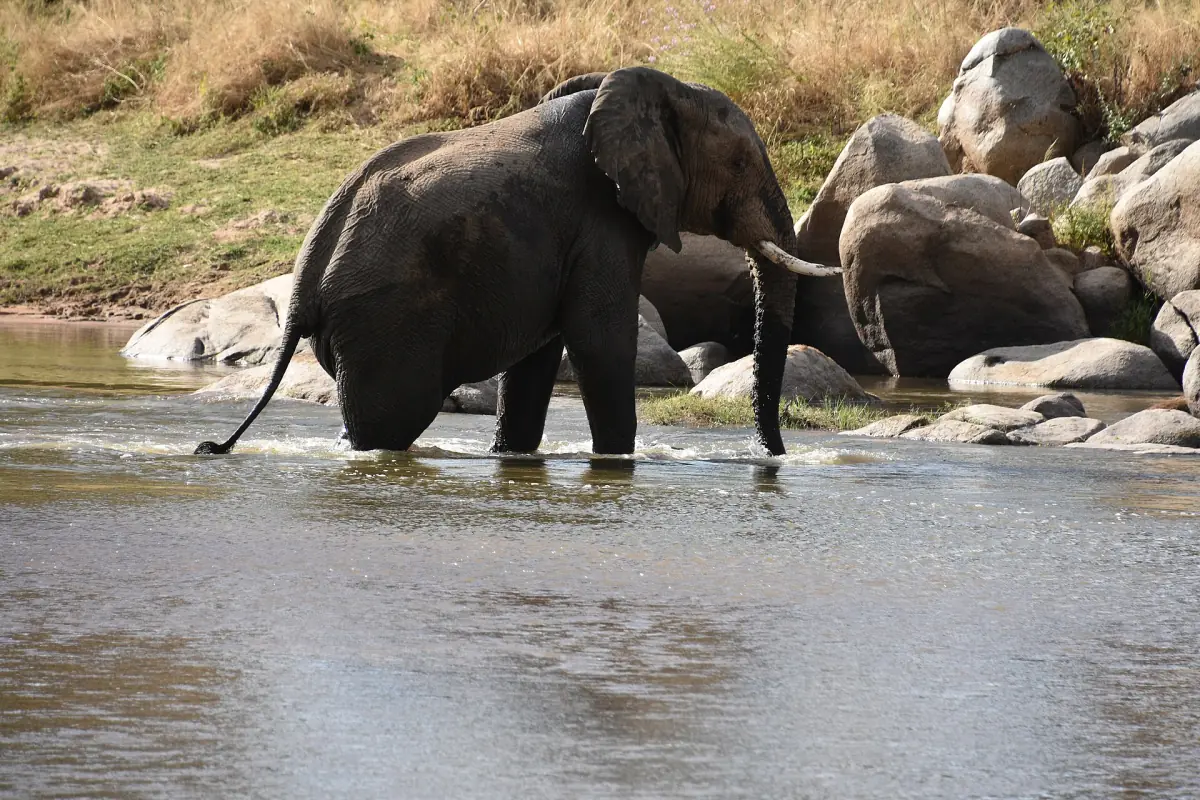
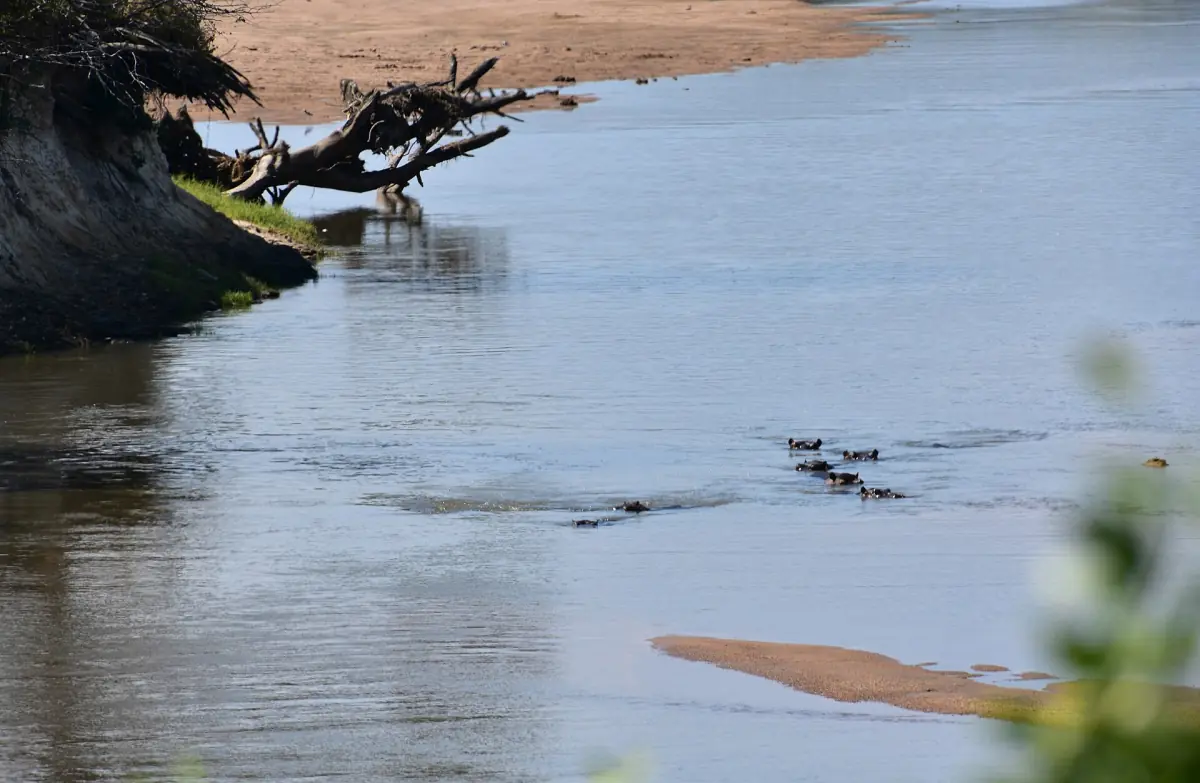
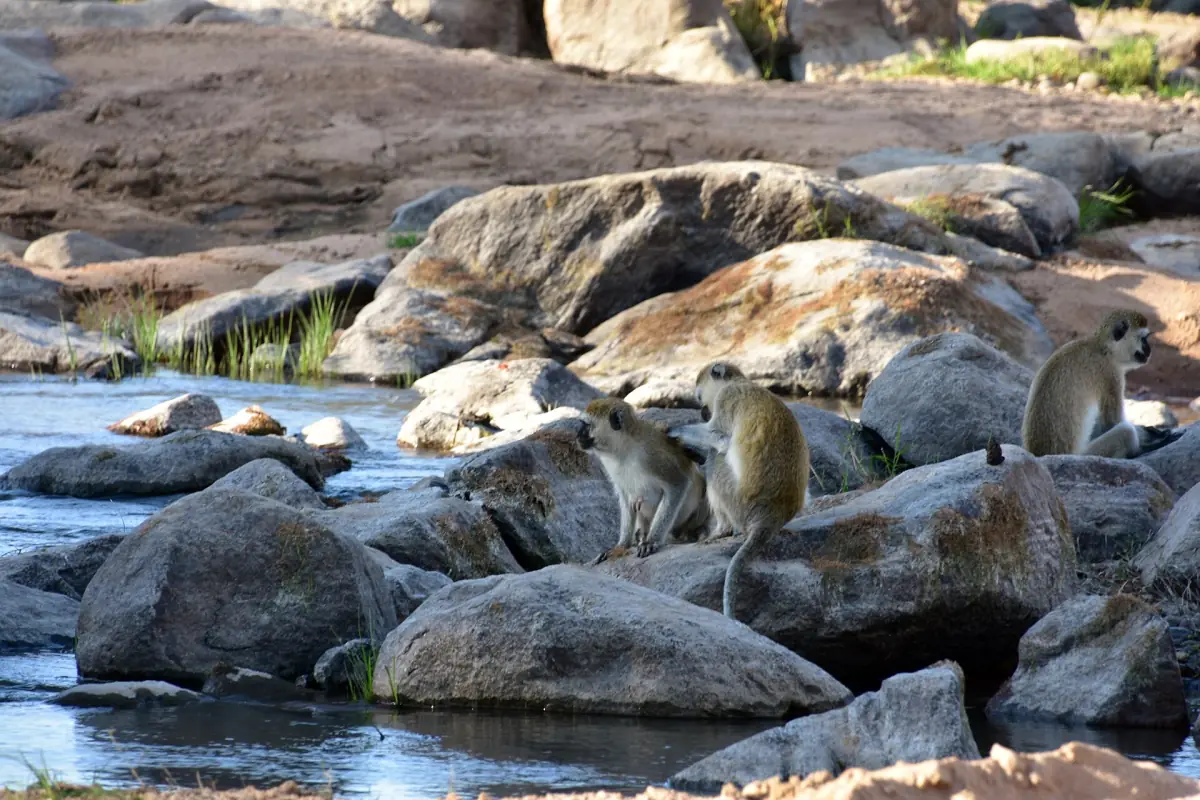
Hippos use the quieter pools and graze on the banks, and crocodiles lie at the water's edge. Both are the reason you do not swim or wade here. Elephants cross the river and drink from it, and giraffes walk over the dry bed. Vervet monkeys sit on the boulders and watch the vehicles go by. If you want to compare with a northern river park, see the Tarangire River.
For the big cats, see the lions of Ruaha. The full animal list is on the wildlife page, and the painted dogs of the south have their own page on wild dogs in Ruaha.
Why the Great Ruaha River has dropped
A water story that starts outside the park.
| Question | What is known |
|---|---|
| What happened in 1993? | In December 1993 a stretch of about 75 km between Ihefu and Mtera stopped flowing for roughly a month. It was a section of the river, not the whole river. |
| Where does the water go? | Irrigation in the Usangu area above the park takes water from the river system. Further downstream the Mtera and Kidatu dams use it for hydropower. |
| Is there one single cause? | No. It is a mix of irrigation, water allocation and use downstream, not one thing alone. |
| What changed in 2008? | The Usangu wetlands were added to the park. |
| What is the flow today? | It changes from year to year and month to month, so ask locally before you go. |
For a first visit, the practical lesson is simple. In the dry season, pick a base close to the water and a guide who knows which stretches still hold pools that year.
Seeing the river safely
Simple rules for the river bank.
Stay in the vehicle
Get out only at places your guide has cleared. Keep your distance from the water's edge, because hippos and crocodiles are close and not always visible.
Walking by the river
Walking is possible only as a guided activity with a ranger, booked in advance through a licensed operator. Self-guided walks are not allowed. See the walking safari guide.
Do not swim
Hippos and crocodiles live in the river and its pools. Do not swim, wade or paddle, even in a shallow pool that looks calm.
Plan your hours
Go out early and again late in the day, and be back before the gate closes at 18:00. The park is open all year.
Great Ruaha River: frequently asked questions
Does the Great Ruaha River dry up?
Parts of it can. In December 1993 a stretch of about 75 km between Ihefu and Mtera stopped flowing for about a month. Today the flow varies by year. Treat it as a seasonal river that drops in the dry months, not as a river that always runs full.
Why does the river run low?
Irrigation upstream in Usangu and hydropower use at Mtera and Kidatu downstream both draw on the same water. No single cause explains the low flow.
Which animals live along the river?
Hippos and crocodiles stay in or by the water. Kudu, elephants, giraffes, buffalo and lions come to drink. A sighting is never certain, but the river gives you good chances.
Can I swim or walk by the river?
No swimming. Walking is possible only on a guided walking safari with a ranger, arranged in advance through a licensed operator.
When is the best time to see the river with animals?
In the dry months, from about June, when water becomes scarce and animals come to the remaining pools. Check the weather page for the season in more detail.
Is this the official Ruaha website?
No. This is an independent guide. It is not run by TANAPA or by any camp or tour company, and it does not sell park permits.